Tuesday, June 4, 2019

From corporate to conscious: how Enterprise Hub helped Laurie Stewart leave behind her corporate roots and develop a conscious fashion platform

Leaving behind a ten-year career working with some of the fashion industry’s biggest brands, Laurie Stewart hasn’t looked back. Now focusing on her new online platform for conscious fashion with business partner Eva Makin, this conscious pair needed help to grow their new venture.


Having recently completed Enterprise Hub’s business growth programme, we 
caught up with co-founder Laurie to find out where Mindless Mag’s journey began 
and how things are going so far…

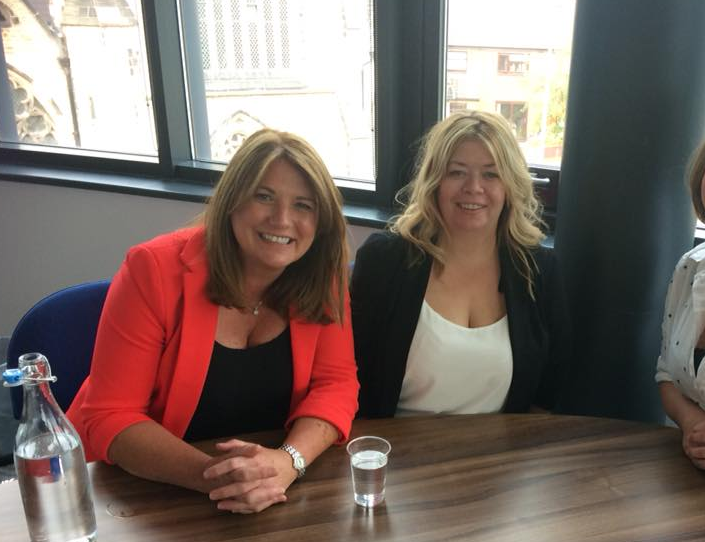
Laurie Stewart, Co-Founder of Mindless Mag


Head over to the Enterprise Hub blog to read the full story by clicking here

Tuesday, May 28, 2019

Keeping Employees Happy - What You Need to Know

The following is a guest blog penned by Ruby Clarkson

Keeping employees happy is an essential part of running any business. After all, happy employees are likely to be more productive. A happy workforce also makes a good impression when it comes to working with customers or hiring additional staff. It's also true that people are more likely to remain working for your business if they are happy with the environment and the job that they are doing.

This is why it's so important to make keeping employees happy a priority. The good news is that there are some simple changes that you can make in order to ensure that you have a happy workforce.
Making sure the location is right

The location of your offices is something that you need to consider carefully, if you want people to be happy working for your business. For instance, if you are choosing an office space in London, there are certain factors that you need to think about when it comes to keeping staff happy such as:

  • Is there suitable parking in the area?
  • Are there good public transport links?
  • Are there amenities such as shops and cash points close by?
  • Are the offices close to parks or other green areas where employees can spend their lunch break?


Having a great location, that takes into account all of these factors, helps to keep employees happy.
Considering co-working as an option

Co-working is an option that is often used by people who are self-employed as an alternative to working from home. It can also be an option for small businesses if they want to share office space.
Sharing office space in this way can make for happier employees. This is because they are in an environment which has life and vitality as there are several people located in the space. Even though these people may be working for different businesses, their energy can help your employees to be happier and more productive.

Making sure that training is an ongoing process:

A few days of on the job training when an employee starts working for your business is not good enough. You need to make sure that you provide them with the training that they need to do their job and to be happy in their work. This training provision needs to be made on an ongoing basis.
It's important to note that providing training and development opportunities for your employees does not just benefit them it also benefits the business as a whole. After all, a well trained workforce is likely to be more efficient and more productive. Listen when your employees ask for training and development and make sure that you provide them with what they need.

Providing employees with the tools that they need:

If your employees do not have the tools and equipment they need to do their job they are never going to be happy. This is partly because not having the right equipment makes the job harder. It's also partly because they feel as though you do not care about their wellbeing because you are not providing the necessary tools and equipment.

This is why you should not settle for having outdated equipment just to save money. For instance, you may be able to save a few pounds by using computers and software that are not up-to-date, but you will lose money when it comes to productivity because the employees who are using these computers are unhappy and frustrated.

Communicating in the right way:

It's vital that you have good communications in your business, if you want your employees to be happy. This is because people become frustrated if they feel that they are not being kept up to date. You need to have an effective communication strategy and plan in place to make sure that this does not happen.

Different methods of communication are best suited to different businesses. For instance, you may want to create a monthly newsletter for the business or you may want to hold weekly or fortnightly meetings with employees. However you choose to communicate, the most important thing is that you do it openly and well.

You also need to make sure that the communication is two-way. You need to pay attention to what your employees are saying, answer any of their questions and respond to any of their criticisms. Doing this effectively helps to keep your employees happy.

It does not take much effort to make the necessary changes to improve the happiness of your employees. Doing so provides you with a more motivated workforce that is likely to be more productive.

Thursday, May 23, 2019

Filmmaker Sofie Wolthers on Directing A New Society, Social Justice, and Changing Careers

Sofie Wolthers is a filmmaker and photographer living in Amsterdam, Netherlands. She is the director of the documentary A New Society, following a collective of over 300 social experts who are using research to address the world’s most pressing crises, from gender inequality to economic injustice. Today, she is sharing her experience as an independent filmmaker and how she sees documentary as a tool for women’s empowerment.

Tell us about your experience using media for social justice – what drew you to using film compared to other mediums?

When I was younger, I remember asking my mom how she chose her career path (she was a midwife at the time). She told me that she wanted to help others, and this was the way she knew how. For me, documentary is the best way I know how to help others. I believe that information has the power to change people's behaviors or thoughts, and documentary is a vehicle for information to reach a large amount of people in a short period of time. Documentary film can transport people to a different country, show them life in a different time period, and even place them in someone else's shoes for a moment. It is this ability to explore the world through the perspectives of others that creates empathy, and for some, film is their only means of travel.

Sofie Wolthers and Columbia University sociologist and woman's rights activist Saskia Sassen

How did you come to find the International Panel on Social Progress? 

This is quite a funny story. Back in 2014 when I was still a journalism major in college, I had a social justice blog called Chi People's Rights where I’d post weekly about human rights issues in Chicago, Illinois. One week, I remember feeling like I wanted to post about something a bit more global. While doing some research on social justice initiatives, I somehow stumbled onto this strange PDF document by the International Panel on Social Progress, who at the time didn't even have a website. I found what they were doing revolutionary and decided to post what I thought at the time was a very professional broadcast about their work (you can see a snippet of this broadcast in A New Society).

When I received an email from Princeton University economist and IPSP co-founder Marc Fleurbaey I was really confused, but next thing I knew, I was on a plane to Princeton and interning for the IPSP as their social media and outreach person. I eventually became their head of social media until I finished University in 2016 and moved to Amsterdam. Then, in 2017 I was contacted by filmmaker and journalist Eileen Jerrett (owner of Wilma's Wish Productions) to direct a documentary about the IPSP. I decided to take on the challenge and together we made A New Society, a film aiming to spark dialogue between activists, academics, and policymakers.

How does the IPSP view the role of women’s empowerment in achieving social progress?

From what I've gathered in interviews with panelists and through my own experience, the IPSP's research dissects where the world is today, what got us here and what we can do to avoid future catastrophe. They’ve shown that gender inequality ties to almost every major threat we’re facing today, from climate change, to extreme poverty, to systemic oppression. We simply can’t target these issues as a society while women around the world are still earning less for the same hours of work, laws failing to include women are excluding them, and they’re underrepresented in almost every position of power in every country on earth. Giving women access, resources, and a voice through groups like the Women’s Organisation is a central part of the IPSP’s vision for social progress.

What did the process of directing A New Society look like?

A New Society is the first feature-length documentary I directed in my life, so of course that came with its challenges. I owe many thanks to Eileen Jerrett, my producer and mentor, for believing in me and taking me through the process of directing a documentary from beginning to end. We worked together as a two-woman team while oceans apart (Eileen in Seattle and I in Amsterdam).

The 9-hour time difference didn’t make things much easier, but we were both so passionate about the project we made it work. Once we picked the panelists to interview, I researched each person, visited them in their homes, and took part in their daily lives for a few days. The toughest part was cutting all 8 authors down to one 56min film. For several months, I painstakingly transcribed the 2-4 hour interviews with Eileen, then I’d edit each interview to about an hour and send the cut over to her for further notes. We’re both incredibly happy with how the film turned out, and I'm thankful for the experience of directing A New Society and all the lessons it taught me.


As a part of a 2-woman filmmaking team, what was the transition like for you making this career change? 

Eileen and I did our best to empower and encourage each other while making this documentary. The hardest part was working together while we were thousands of miles apart. It was also a huge transition for me because I had recently moved to Amsterdam, a city completely foreign to me, and was working from home. I had to really make an effort to meet people and assimilate because I didn't have the luxury of meeting people through work. Now that I’ve been self-employed for about two years, I absolutely love the freedom it gives me and I’m very used to collaborating with people internationally. It's opened many doors for me because I am no longer confined to working with someone in the same city as me, and technology allows me to work with others on personal and intimate projects while being oceans apart.

Do you have any advice for women looking to go into film-making or to dedicate their careers to social justice?

My advice to other women going into filmmaking, social justice or any career is that hard work pays off. Don't expect to start at the top, there’s really no such thing as an overnight success. If you want something, fight for it, then fight for it some more and I promise you’ll achieve your goal eventually. You also don’t have to go through the journey alone: find your mentors early on to guide you and keep you grounded. Don't let the patriarchy get you down, and don't compete with your fellow woman. There is room for all of us to succeed, and there is strength in our solidarity.

What’s next for you?

Filmmaking has become a part of who I am, and I want to continue using it to shed light on underrepresented issues that affect women in particular. I'm currently developing a documentary series called Period Piece, which will be dissecting the role of menstruation in Western society today. To keep up with our developments, follow @periodpiecedoc on Instagram!

Author’s Bio: Mously Lo is studying Economics at Princeton University. She is passionate about women’s rights, economic inequality, and racial injustice. With the International Panel on Social Progress, she aims to bring together activists, academics, and policymakers to redefine social progress.

Monday, May 20, 2019

Building Your Social Media Influence


Being on Social Media is now more critical than ever if you're looking to build a following for your business. Social media is now one of the main forms of communication used to reach an audience and it's becoming more and more important to establish yourself online with a strong brand presence.

Here at The Women’s Organisation we are holding an event to help you build up your own social media presence. We have 3 social media experts who have worked over the years to build a successful following and establish strong relationships with their online audience. You will take home tips and tricks to build your following and be inspired to be the next social media influencer for your business!


Join us Tuesday 18th June, 6pm-8:30pm at 54 St James Street, L1 0AB


Our Panelists 


Ben Osu - Content Producer and Presenter

Ben set up his own community forum, giving young people of the city a voice and soon became a youth leader working with multiple agencies across the city on youth policy and service design and provision. After a social media campaign in 2009, Ben was successful at bringing the MOBO (Music of Black Origin Awards) to the city and back again in 2012.

Karen Beddow - Founder of multi-award winning travel blog 'Mini Travellers'

Karen left her full-time role as a commercial litigation solicitor when she had her children to concentrate on her Family Travel blog Mini Travellers. Karen has used her skills to create and then turn Mini Travellers into an established creative business, that has meant she can work from home and spend more time with her three children. Karen also has a social media consultancy Aster & Fern. 

Nicky Speed - Head of Communications Sefton Council

Influential communications leader Nicky Speed has over 18 years' experience in the industry, working in a variety of sectors from local government and higher education to housing, transport and health, with a proven track record in building organisational profile, reputation and brand.

Building Your Social Media Influence will be held at 54 St James Street on Tuesday, June 18, from 6pm to 8.30pm. Tickets are available over on eventbrite: https://www.eventbrite.co.uk/e/business-club-building-your-social-media-influence-tickets-59574071652


Business Club

The Women's Organisations Business Club is an exclusive women's only networking group which is open to female business owners.

Membership is open to female business owners only and is per individual not per business. Additional staff members can be booked onto individual events as you go. Our events will mostly be held at our flagship building, 54 St James Street in Liverpool but members are welcome to join from anywhere.

Friday, May 17, 2019

What can your business do to help close the Gender Pay Gap?

This week, the experts at Sage Advice have taken over our guest blog to explain what small business owners can be doing to help close the gender pay gap...


With the most recent Gender Pay Gap (GPG) reports showing that 78% of companies have a pay gap in favour of men, many companies are left asking what actions they can take to close the gap within their workplace.


GPG reporting itself is an important first step to tackling the gap, so while small businesses are not currently legally required to report on this figure, if you’re serious about the GPG it’s vital to first identify any gap within your firm. Up to 15% of GPG reports this year had errors so make sure you take the time to understand and follow the process correctly, for example, take a look at this guide to gender pay gap reporting by Sage which helpfully breaks it down step by step.

After identifying your gap, you should also analyse the gender balance at all levels of your company:

        Are there more men than women within senior roles? How about your junior roles?
        Does your current working culture encourage employees of all genders to apply for roles?
        Would offering benefits such as flexible working, childcare or shared parental leave help encourage a more gender equal workplace?


Another concern for small businesses should be unconscious bias. People often base their decisions based on subconscious biases due to culture, background and personal experiences and this can result in them favouring employees who are similar to themselves. Any such prejudices can be combatted through awareness, training and creating a workplace where both genders are equally valued and respected. Consider providing mentorship and leadership training to all staff to help boost their confidence and motivate them to progress. Then when shortlisting employees for advancement, you should encourage decision makers to set aside any gender biases and actively encourage women to apply for more senior roles.

Additionally, if your business is within a sector which is typically male-dominated then promoting female-orientated events and advertising will help encourage more female applicants.

Overall, there are a large number of factors which impact the GPG but businesses of all sizes can make positive changes to the way their company is run to help close the gap.

Find out more about the Gender Pay Gap at Sage Advice.

About the author: Sage Advice

Sage is the market leader for integrated accounting, payroll, and payment systems, supporting the ambition of the world’s entrepreneurs.

Monday, May 13, 2019

Space is open for business! Funding and support from The European Space Agency


Is space technology on the radar for your business? The European Space Agency’s Business Applications could be the ideal platform to help launch your concept.


ESA Business Applications offers funded support programmes to help businesses integrate space data and technology into commercial services.

Put simply, think of ordering a takeaway on popular mobile phone apps like Just Eat. This platform uses satellite technology from space to track location and get your food to you. It is this space data which is changing and simplifying business, not to mention our everyday lives on earth.

Whether you’re developing a mobile phone app, or work in industries from construction, to the insurance sector or lifestyle industry, businesses big and small, space applications could fuel your business.

The European Space Agency’s team are looking for innovative ideas which use space assets like human spaceflight technologies, satellite communication, satellite navigation, earth observation and space weather.

Does this sound like something your business could use support with? Then ESA Business Applications could have the support you need.

If you have an idea for space technology in your business, you can apply for ESA Business Applications support and funding anytime through their open call system. There are also regular opportunities for competitive tenders which follow specific themes. You can find out more about the application process here: https://business.esa.int/how-to-apply

If you’d like to find out more about what space has to offer for your business, then why not join the European Space Agency’s Business Applications Regional Ambassador for ‘Your Business Powered by Space’ – a free event to introduce you to how your business can utilise space and what support is on offer for you.

Taking place on Thursday 13th June, 9am – 5pm at Concorde Hangar in Runway Visitors Park, Altrincham. Full event details can be found here: https://www.eventbrite.co.uk/e/your-business-powered-by-space-tickets-56640768062

For more information, you can contact the ESA Business Applications Regional Ambassador (North West England & North Wales), Alan Cross by e-mail via  alan.cross@stfc.ac.uk.

Tuesday, May 7, 2019

In the Media: Enterprise Hub addresses enterprise gender gap across Liverpool city region

In its first phase The Liverpool City Region Enterprise Hub helped more than 6,000 would-be entrepreneurs, 60% of them women, and is now looking to step up that effort. Tony McDonough reports for LBN
Enterprise Hub
Sara Burgess, left, and Joanne McCormick, founders of ‘child-friendly’ Liverpool hair salon, Ava & Harrison

Investing in more women-led businesses could boost the UK economy by £250bn, a report claims, and Liverpool city region’s support programme for fledgling entrepreneurs is doing its bit to the address the enterprise gender gap.
Published in March, The Rose Report revealed that just 6% of UK women run their own businesses, compared with 15% in Canada, almost 11% in the US and more than 9% in Australia and the Netherlands.
Since launching the Enterprise Hub in Dec 2015, a single-door access point to advise and support people who had started, or had ambitions to start, their own business, The Women's Organisation have supported women led businesses to access more than £1.7m in business finance. 
One, now thriving, business to benefit from that assistance was Sara Burgess and Joanne McCormick, founders of ‘child-friendly’ Liverpool hair salon, Ava & Harrison who benefitted from £30,000 of start-up loans.  Celebrating their first birthday Joanne McCormick says they "couldn't have done it" without the support from Enterprise Hub and their business adviser. 
Enterprise Hub is part funded by European Regional Development Fund.
For the full article on LBN click here.